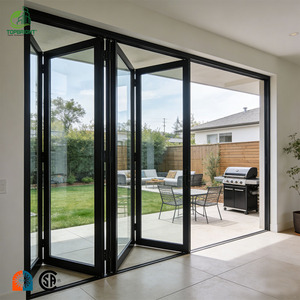
Factory Direct Catalog
High-Performance Architectural Fenestration Systems
Explore our flagship double glazed aluminium windows and exterior door systems engineered to meet international building codes (NFRC, CSA, AS2047, CE EN 14351-1).
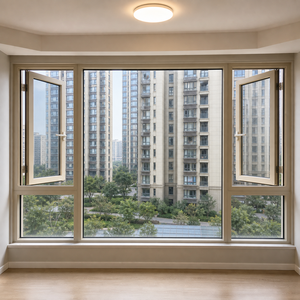
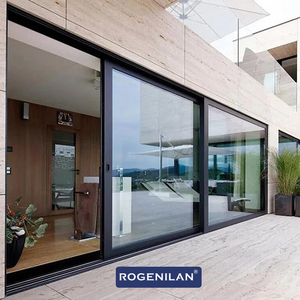
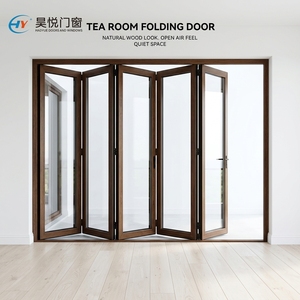
1995
Established Year
20,000 m²
Modern Production Facility
60+
Global Export Markets
ISO 9001
Quality Management Certified
Factory Advantage & Verification
Why Top Global Contractors Partner with China's Premier Aluminium Window Exporter
20,000m² Integrated Smart Factory
Since 1995, our specialized manufacturing complex houses precision CNC profile cutting, automated thermal break insertion, robotic double glazing assembly lines, and rigorous structural testing bays.
- High-precision extrusion handling using 6063-T5/T6 structural grade aluminium alloys.
- In-house powder coating and anodizing matching Qualicoat standards.
- Capacity to handle bulk high-rise, villa development, and commercial resort schedules.
Comprehensive Global Compliance
We eliminate regulatory risk for overseas importers, architectural firms, and general contractors. Our systems are engineered and pre-tested to meet stringently enforced international standards.
- NFRC Ratings: Certified U-Factor, SHGC, and Visible Transmittance data for North America.
- NAFS / CSA A440: Tested structural wind load and water tightness compliance.
- AS 2047 & AS 1288: Verified performance standards tailored for Australian residential and commercial builds.
- CE Marking (EN 14351-1): Certified safety and environmental compliance across the European Union.
Industry Technical Whitepaper
Engineering Structural Excellence: Thermal Breakdown & Glazing Physics
Understanding the micro-engineering behind modern Chinese double glazed aluminium window manufacturing—moving from passive fenestration to high-efficiency building envelopes.
Polyamide Thermal Break (Broken Bridge) Dynamics
Standard aluminium profiles conduct extreme thermal energy. China's leading exporters utilize advanced "Broken Bridge" technology, incorporating PA66 GF25 (25% Glass Fiber Reinforced Polyamide) multi-cavity thermal insulation strips.
This structural barrier separates interior and exterior aluminum frames, effectively stopping conductive thermal bridges, dampening acoustic vibrations by up to 42 dB, and preventing interior surface condensation in humid or extreme freezing climates.
Insulated Glass Units (IGU) & Low-E Coatings
Our export-grade double glazing utilizes high-performance dual-pane sealed units (e.g., 5mm + 20A + 5mm) filled with 90%+ pure Argon gas. Warm-edge Swisspacer bars replace traditional aluminum spacers, drastically cutting perimeter U-factor thermal leakage.
Soft-coat Low-E (Low Emissivity) multi-layer silver coatings reflect long-wave infrared heat back outward in hot summer months while retaining indoor climate heating during sub-zero winter spells.
Architectural Fenestration System Matrix
| System Series | Frame Profile Depth | Thermal Break Tech | Target U-Factor (W/m²K) | Sound Insulation (STC) | Ideal Application |
|---|---|---|---|---|---|
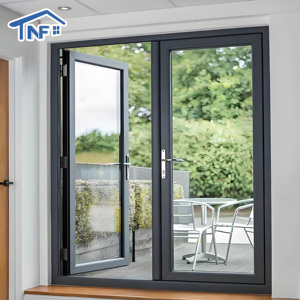
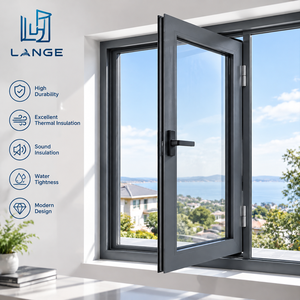
| PRO110 Casement | 110 mm System | PA66 GF25 Multi-Cavity | 1.2 - 1.6 W/m²K | 40 - 45 dB | High-rise residential, coastal hurricane zones, luxury villas |
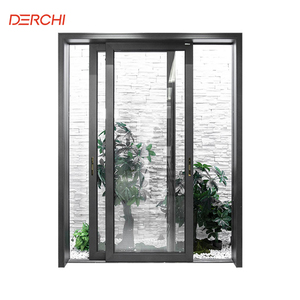
| TY120 Heavy Sliding | 120 mm Track System | Reinforced Thermal Bridge | 1.5 - 1.8 W/m²K | 35 - 40 dB | Panoramic patio openings, hotel resort balconies, garden access |
| TY150 Lift & Slide | 150 mm Sub-Frame | Double-Insulated Polyamide | 1.1 - 1.4 W/m²K | 42 - 48 dB | Ultra-large glass spans, extreme climate cold-weather zones |
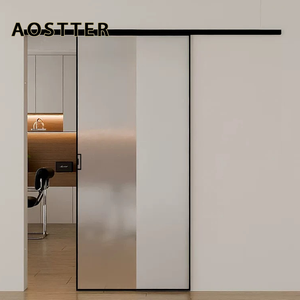
| Minimalist Ghost / Hidden | Concealed Track | Acoustic Seal Buffer | Non-Thermal / Interior | 30 - 35 dB | Luxury indoor partitioning, interior master suite bathrooms |
Future Market Insights
2025–2030 Global Procurement Trends in Wholesale Aluminium Windows
Key strategic shifts transforming how commercial developers, architectural builders, and B2B buyers source double glazed fenestration products from Chinese manufacturing hubs.
1. Decarbonization & Environmental Product Declarations (EPD)
Global architectural codes are shifting toward whole-lifecycle carbon accounting. Sourcing double glazed windows now demands verified Environmental Product Declarations (EPDs). Leading Chinese factories are adopting low-carbon recycled aluminum billet extrusion and powered-by-solar manufacturing facilities to significantly lower embodied carbon footprint metrics.
2. BIM Level 2 Integration & Parametric Customization
Procurement is no longer executed through simple CAD sheets. Modern projects require fully articulated Building Information Modeling (BIM) Revit files. Top exporters supply parametric 3D fenestration models containing exact thermal conductivity data, structural anchor points, and hardware operation paths directly into the developer's architectural master plan within 24 to 48 hours.
3. Smart Fenestration & Automated Climate Envelopes
Commercial and luxury residential buyers increasingly demand integrated smart actuators, rain sensors, concealed motorized opening mechanisms, and electrochromic (smart tinting) double glazed IGUs. These allow automated HVAC load shedding and smart home automation through Zigbee/KNX building protocols.
4. Supply Chain Consolidation: Single-Source Bundling
Project managers are avoiding fractured procurement schedules by bundling complete building exterior packages—combining casement windows, heavy-duty lift-and-slide patio doors, glass skylights, sunrooms, and matching architectural louvers from a single OEM factory floor to guarantee finish uniformity and synchronized containerized site delivery.
Buyer Guidance & FAQ
Frequently Asked Questions for Sourcing Aluminium Glazing from China
In-depth technical and logistics answers curated by our senior window engineering and export team.
Can your factory manufacture double glazed windows to exact custom architectural shop drawings?
Yes. Every unit produced in our 20,000m² factory is custom engineered to match architectural drawings and structural wall rough openings. Our engineering department reviews your architectural CAD/Revit files, calculates wind-load resistance requirements, generates marked-up shop drawings within 24 hours, and produces pre-production physical samples prior to full extrusion cutting and glass assembly.
What specific certifications and test reports are available for export orders?
Depending on your target market and local building code authority, we supply comprehensive test documentation including North American NFRC energy performance ratings, NAFS / CSA A440 air/water/structural test reports, Australian AS 2047 / AS 1288 certified test data, European CE Marking (EN 14351-1), Intertek laboratory validation reports, and ISO 9001:2015 quality control manufacturing auditing documents.
How do you specify glass and thermal breaks for contrasting extreme climates?
Our engineers configure system specs based on job site environmental data:
- Typhoon Coastal Belts: Heavy-duty PRO110 casement frames, multi-point lock hardware, and 5mm+20A+5mm tempered or laminated IGUs with EPDM triple gasket seals.
- Hot Arid / Desert Regions: Solar-Control Low-E double glazing with low Solar Heat Gain Coefficients (SHGC < 0.25) to block solar heat radiation.
- Cold / Sub-Zero Regions: PA66 GF25 thermal break profiles paired with triple glazed Low-E Argon gas units and warm-edge spacers achieving ultra-low U-factors (< 1.2 W/m²K).
- Wildfire Hazard Zones: Non-combustible aluminum extrusion frameworks with dual-pane tempered fire-resistant safety glazing.
How are heavy glazed window frames packed to eliminate ocean transport freight damage?
Export packing is handled with specialized industrial packaging protocols: frame faces are covered in protective anti-scratch films, corners are reinforced with thick foam plastic guards, and complete assemblies are strapped inside fumigated IPPC-certified plywood crates. Units are organized and packed into containers based on floor plans or window elevation tags to simplify unloading and sequencing at your construction site.
What is the typical factory production lead time for bulk wholesale orders?
Standard manufacturing turnaround spans 20 to 30 calendar days following final shop-drawing sign-off and color sample approval. Customized architectural finishes (such as specialized metallic fluorocarbon PVDF coatings or custom wood-grain powder wraps) may require 35 days. Express production slots are available for urgent commercial phased fit-outs.
Request a Factory-Direct B2B Quote & Technical Consultation
Upload your architectural schedules, CAD files, or project bills of quantities. Our engineering team will deliver a comprehensive itemized quote, system thermal calculations, and shop drawings within 24 hours.