Top Trusted Aluminium Glass Window Supplier & Exporter

Engineered Architectural Glazing, Thermal-Break Systems, and Custom B2B Export Solutions Compliant with NFRC, CE, & AS2047 Standards

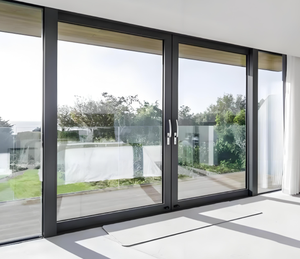
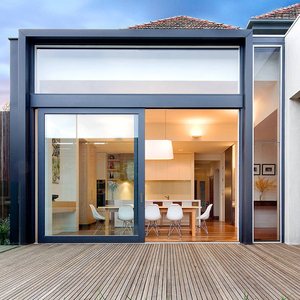
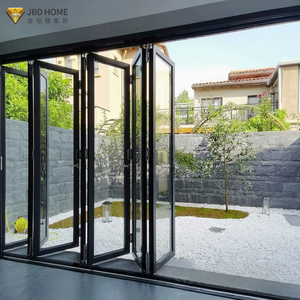
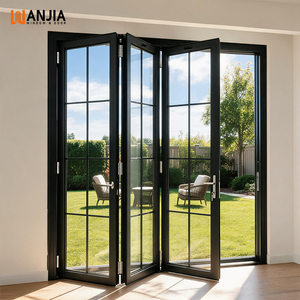
Architectural Showcase

High-Performance Aluminum Glass Window & Door Systems

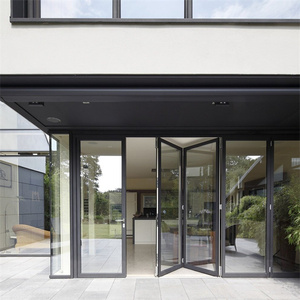
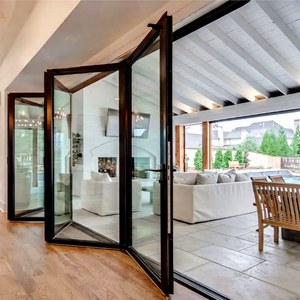
Explore our export-grade, precision-engineered architectural window and door inventory. Built with high-tensile T6 6063 aluminum alloys, advanced polyamide thermal breaks, and multi-layer tempered safety glass for commercial, residential, and industrial applications.

Factory Expertise & Authority

Why Tier-1 Developers & B2B Procurement Managers Choose Us

Operating a state-of-the-art 20,000 m² manufacturing facility since 1995, we deliver end-to-end engineered architectural glass and aluminum fenestration solutions across 60+ countries.

28+
Years Industry Authority
20,000m²
Smart Manufacturing Facility
60+
Global Export Markets
100%
Quality Assurance Control

In-House Precision Fabrication

From primary alloy billet extrusion to high-precision CNC miter cutting, milling, corner crimping, and automated glazing seal application—every step is completed under strict ISO 9001:2015 quality management oversight.

International Code Compliance

Our architectural window systems undergo rigorous independent laboratory testing. We provide certified documentation for NFRC energy ratings, North American NAFS/CSA A440 compliance, European CE EN 14351-1 standards, and Australian AS 2047 wind/water resistance.

Custom Shop Drawings & BIM Support

Our dedicated engineering department converts CAD/BIM architectural schematics into detailed manufacturing shop drawings within 24 hours. Fabrication begins only after client sign-off and mock-up prototype approval.

Reinforced Overseas Logistics Packaging

Glazed systems are vulnerable during ocean transits. We protect frames with anti-scratch PE film, place rubber corner guards, enclose units in sealed, ISPM-15 compliant fumigated wooden crates, and load containers according to site installation sequences.

Technical Engineering Whitepaper

Structural Physics, Thermal Dynamics & Material Engineering of Architectural Glazing

A comprehensive engineering breakdown for facade consultants, structural engineers, and commercial general contractors.

1. Extrusion Metallurgy & Profile Structural Dynamics

The structural backbone of modern architectural windows lies in the selection of the primary aluminum alloy. High-grade architectural fenestration utilizes 6063-T6 aluminum extrusion alloys. The T6 heat-treatment process involves solution heat treating followed by artificial aging, yielding an ultimate tensile strength exceeding 205 MPa and yield strength over 170 MPa.

Compared to standard commercial extrusions, T6 grade profiles provide the flexural rigidity required to support massive floor-to-ceiling glass loads while maintaining deflection tolerances under severe wind pressure (Design Wind Pressure up to 5.0 kPa). Surface treatments include fluoropolymer PVDF coatings (AkzoNobel / PPG PPG Duranar) and 25-micron hard-anodized layer finishes designed to surpass 3,000-hour neutral salt spray (ASTM B117) corrosion testing—vital for coastal resort developments.

2. Thermal Break Technology: Polyamide vs. Pour-and-Debridge

Uninsulated aluminum exhibits high thermal conductivity ($k \approx 200 \text{ W/m}\cdot\text{K}$), creating thermal bridges that cause energy loss and interior frame condensation. Advanced thermal-break window engineering integrates extruded Polyamide PA66 reinforced with 25% short glass fibers (PA66GF25).

Performance Metric Standard Non-Thermal Break Standard Thermal Break (14-20mm) Ultra-Performance Thermal Break (24-34mm)
Frame U-Factor ($W/m^2\cdot K$) 6.5 - 7.0 2.2 - 2.8 1.0 - 1.5 (Passive House Ready)
Thermal Expansion Coeff. High (Frame Distortion Risk) Matched to Aluminum ($2.3 \times 10^{-5}/K$) Engineered Co-Extrusions with Insulation Foam
Acoustic Isolation (STC) 25 - 28 dB 34 - 38 dB 42 - 48 dB (Triple Glazed + Laminated)
Condensation Resistance (CR) Low (Risk in cold climates) Moderate to High (> 55) Superior (> 72)

3. Glass Spectroscopy & Acoustic Performance

Glass accounts for up to 85% of a window assembly's total surface area. Optimizing fenestration energy performance requires balancing three key solar-optical properties:

  • U-Factor (Thermal Transmittance): Measures heat transfer rate. Double-pane insulated glass units (IGU) with Low-E soft coatings and 90% Argon gas fill achieve U-factors down to 1.1 $W/m^2\cdot K$.
  • Solar Heat Gain Coefficient (SHGC): Specifies the fraction of incident solar radiation admitted. Hot solar climates require low SHGC ($0.22 - 0.30$) to reduce air-conditioning load, whereas cold climates benefit from higher SHGC ($> 0.45$) for passive solar heating.
  • Visible Light Transmittance (VLT): High VLT ($> 65\%$) maximizes natural daylighting while cutting artificial lighting energy usage.

For acoustic attenuation near airports, busy urban corridors, or commercial entertainment districts, asymmetric laminated glass configurations (e.g., $6\text{mm Low-E} + 12\text{Ar} + 4\text{mm Glass} + 1.52\text{PVB} + 4\text{mm Glass}$) interrupt resonant sound waves, achieving Sound Transmission Class (STC) ratings up to 45 dB.
Industry Intelligence

Future Development & Global Procurement Trends in Aluminum Glazing

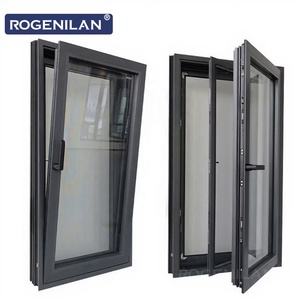
As international building energy codes tighten and architectural design aesthetics evolve, fenestration procurement is shifting toward four major technological fronts.

1. Ultra-Narrow Sightlines & Structural Silicone Bonding

Architectural demand is moving rapidly toward minimalist, concealed-frame designs. Interlocking stiles are slimming down from traditional 80mm profiles to ultra-slim 20mm sightlines. Structural silicone glazing (SSG) techniques transfer wind loads directly from the glass panel to the internal aluminum mullion, allowing floor-to-ceiling glass elevations exceeding 4 meters without sacrificing structural safety.

2. Low-Carbon Recycled Billet & Circular Sourcing

Driven by EU Carbon Border Adjustment Mechanisms (CBAM) and ESG procurement mandates, overseas developers are prioritizing fenestration built from recycled aluminum billets (containing 75%+ post-consumer scrap). Low-carbon primary aluminum smelted using hydroelectric power dramatically reduces the embodied carbon footprint from 18 kg $CO_2$/kg down to less than 4.0 kg $CO_2$/kg of aluminum profile.

3. Smart Home Automation & Motorized Drive Systems

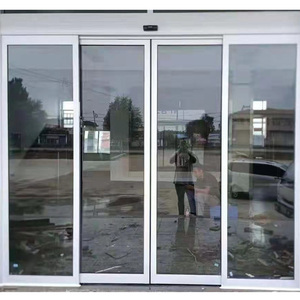
Next-generation large-format sliding doors and skylights are increasingly integrated with motorized driving units. Micro-computer processors paired with wall switches, remote controllers, or smart home automation platforms (Zigbee / KNX) allow effortless opening of 500kg sash panels. Safety sensors, including infrared safety beams and anti-pinch obstruction detection, are standard requirements in modern luxury developments.

4. Strict Regional Building Code Compliance Sourcing

Global procurement teams no longer accept generic non-certified window packages. Sourcing managers demand project-specific certification test reports before releasing purchase deposits. This includes impact testing for coastal hurricane zones (Miami-Dade / Florida Building Code), thermal modeling for North America (NFRC standards), and acoustic / air tightness verification for Australian projects (AS2047 / AS1288).

Buyer Knowledge Base

Frequently Asked Questions for B2B Window & Door Sourcing

Essential answers regarding architectural shop drawing sign-offs, minimum order quantities, shipping protection, compliance testing, and custom manufacturing workflows.

Can you manufacture aluminum windows and doors strictly based on our architectural CAD/BIM drawings?

Yes. Every unit is manufactured to order. Our technical design team reviews your architectural plan, structural wind-load requirements, and wall rough opening dimensions. Within 24 hours of receiving your drawings, we return fully detailed 2D/3D shop drawings—including profile cross-sections, glass build-ups, drainage details, and hardware installation callouts—for formal approval prior to production.

What specific international quality certifications and test reports can you provide for our project?

Depending on your regional building codes, we provide certified third-party laboratory test reports including NFRC (National Fenestration Rating Council) energy performance ratings for North America, NAFS/CSA A440 structural/air/water testing, European CE EN 14351-1 compliance documentation, Australian Standard AS 2047 / AS 1288 certification, and ISO 9001:2015 factory quality management verification.

How do you configure frame thermal breaks and glass specifications for drastically different climate zones?

We engineer profile thermal break widths and glass coatings based on local thermal modeling. For tropical or desert climates (e.g., Middle East, Southeast Asia), we specify wide thermal breaks paired with Low-E reflective solar-control glass to minimize Solar Heat Gain (SHGC < 0.25). For cold alpine zones (e.g., Canada, Northern Europe), we implement triple-pane argon-filled IGUs with warm-edge spacers to achieve low U-factors (< 1.2 W/m²·K). For hurricane coastal zones, heavy-wall profiles are equipped with PVB/SGP laminated impact-resistant glass.

What protection measures are used during sea freight packing to prevent glass breakage and frame scratches?

All aluminum extrusions are wrapped in protective PE anti-scratch film and tape. Corners are fitted with shock-absorbing rubber edge protectors. Assembled window and door units are mounted inside customized, fully enclosed plywood crates (fumigation-free ISPM-15 compliant). Crate interiors are padded with high-density foam blocks, and containers are loaded using steel strapping to eliminate shifting during ocean transit.

What are the minimum order quantities (MOQ) and production lead times for custom B2B orders?

Our manufacturing line accommodates both custom luxury residential projects and large commercial developments. While we accept project orders starting from a single villa container load (~100 sq. meters), optimized volume pricing takes effect at full container loads (20GP / 40HQ). Standard production lead times range from 25 to 35 calendar days following shop drawing sign-off and color sample approval.

What hardware brands and surface finish options can be specified?

We partner with premier hardware manufacturers including German SIEGENIA, HOPPE, GU, and ROTTO, as well as premium domestic high-durability hardware systems. Available aluminum surface finishes include Qualicoat-certified AkzoNobel powder coating (in any RAL color code), PVDF fluoropolymer painting for severe marine environments, wood-grain heat transfer finishes, and 25-micron anodic oxidation.

Partner with a World-Class Architectural Glazing Manufacturer

Need engineered aluminum windows, heavy-duty sliding patio doors, or structural skylight systems for your upcoming development? Submit your drawings today for a complete quotation and engineering review within 24 hours.

Get Catalog