Choosing an Aluminum Window in 2026 is not just a matter of color or frame thickness. The right choice depends on climate, orientation, glass, installation, and how the room is used. The U.S. Department of Energy’s Energy Saver guidance estimates that heat gain and heat loss through windows account for 25%–30% of residential heating and cooling energy use. That is a meaningful share. It makes performance worth checking before comparing finishes.
Start with the whole window, not aluminum alone. Lawrence Berkeley National Laboratory window researcher Dr. Dariush Arasteh’s work highlights the importance of evaluating window performance as a complete system. In practical terms, compare the frame, glazing, seals, and thermal break together. Check the NFRC label for U-factor and solar heat gain coefficient (SHGC); these ratings help you compare products on a consistent basis. A thermally broken aluminum frame can reduce heat transfer through the metal, but the result still depends on glass and installation. A low U-factor may suit cold winters, while SHGC deserves careful attention in sunny rooms. No single rating tells the whole story.
Look closely. Ask for documented ratings, warranty terms, and installation details—not just a showroom sample. Check how the frame meets the wall, where water drains, and whether the installer can explain the sealing method. Those details are easy to overlook. I would not assume the most expensive model is automatically best; product specifications and workmanship matter more. Some choices remain imperfect, especially when budget, appearance, and energy goals compete. A useful comparison starts with your climate, your home, and the actual certified performance data.
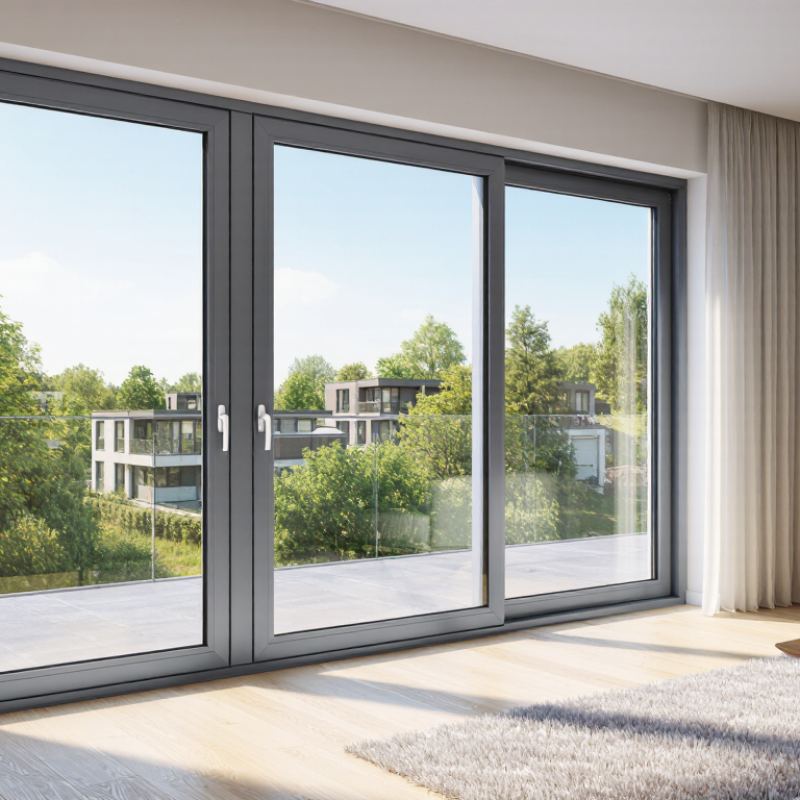
How to Choose Aluminum Windows in 2026?
Start with the weather your windows must face, not a product brochure. In cold regions, prioritize a low U-factor and well-designed thermal breaks to reduce heat loss and interior condensation. In hot, sunny areas, compare solar heat gain and consider exterior shading, especially on west-facing glass. Coastal sites need careful attention to corrosion-resistant finishes and tested water resistance. Details matter.
Building type changes the decision. A compact home may benefit from fixed units where ventilation is unnecessary, while operable windows can serve kitchens and bedrooms. High-rise projects face wind loads, access limits, and more demanding installation coordination than a small renovation. For schools or busy commercial spaces, consider durable hardware, safe opening limits, and straightforward maintenance. Ask how each option fits daily use, not just the drawings.
Set performance goals before comparing frame options. Request documented U-factor, air leakage, water resistance, and structural test results for the exact configuration, not just the frame material. Check the glass, spacer design, seals, and installation details; these can change real-world performance. It is easy to overvalue a sleek profile. Still, a high-performing window can disappoint if the opening is poorly flashed or out of square. Allow room in the specification for site conditions that may be less predictable than expected.
Start with your climate, building type, and performance goals. In cold regions, prioritize lower heat loss; in warmer regions, balance insulation with solar heat control.
How to read this chart: These are maximum U-factor thresholds for qualifying residential windows under 2023 U.S. climate-region criteria, shown in Btu/(h·ft²·°F). A lower U-factor means less heat transfer through the window.
For aluminum windows, compare whole-window ratings and consider thermally broken frames. Commercial buildings and local codes may have different requirements; check the rules for your project and climate zone.
Reference: 2023 U.S. residential window climate-region qualification thresholds. These values are not a substitute for locally adopted building codes.
When comparing aluminum windows, check NFRC whole-window ratings, not frame-only claims. U-factor measures heat transfer; lower values mean better insulation. Compare products with the same glazing and configuration, since these affect the rating. Aluminum conducts heat readily, so thermal breaks and careful installation matter.
SHGC ranges from 0 to 1. A rating of 0.30 means roughly 30% of incident solar heat enters indoors. Lower SHGC can help limit summer heat, while a higher rating may provide useful winter warmth in some locations. Context matters. The U.S. Department of Energy’s Energy Saver guidance estimates that windows account for 25–30% of residential heating and cooling energy use.
A high SHGC is not automatically a mistake; check window orientation, shading, and local climate before deciding.
Tips: Compare NFRC ratings for the exact window size and glass package you plan to buy. For a sunny west-facing room, ask about lower-SHGC options. For a shaded room, don’t assume the lowest number is best. Check the installation details, too. A good rating cannot fix a poor fit.
When choosing aluminum windows in 2026, compare whole-window performance, not frame claims alone. Thermal breaks separate the inner and outer aluminum sections with a less conductive material, reducing heat flow through the frame. Ask for the break’s construction, and check the window’s certified U-factor. ENERGY STAR Version 7 sets maximum U-factors from 0.22 in the Northern climate zone to 0.32 in the Southern zone. These are climate-specific benchmarks, not guarantees that every home will feel comfortable. A narrow frame can admit more glass, but its sightlines and drainage details deserve close inspection. Small details count.
Condensation resistance matters on cold mornings. The National Fenestration Rating Council’s optional Condensation Resistance rating helps compare products, but it does not promise a condensation-free window. Indoor humidity, edge spacers, frame temperature, and installation all affect results. Look for a rating alongside U-factor, then inspect sample corners and glazing edges for exposed metal or weak seals. Cold corners matter. I would not choose a window from a laboratory rating alone; a carefully rated unit can still disappoint if the opening is poorly sealed. Ask the installer how the sill sheds water and how the frame connects to the wall. That answer can be less polished than a brochure, but more useful.
When comparing aluminum windows, do not judge performance by frame thickness or a smooth showroom sample. Ask for documentation showing the product was tested to the applicable AAMA/WDMA/CSA 101 standard, also known as NAFS. The record should match the window’s operating style, glazing, hardware, and tested size. A result for a fixed unit may not apply to a sliding window.
Review air leakage, water penetration resistance, and structural performance separately. Air leakage testing indicates how much air passes through a closed, locked window under specified pressure. Water testing checks whether water enters under defined conditions. Structural testing measures resistance to wind loads and deformation. Look for the performance grade and product designation, not just a general claim of “tested.” Small details matter. A larger unit or different glass package can change what evidence is relevant.
Ask the supplier for the test report or certification record, then compare its ratings with the project’s exposure and local design requirements. For a windy, rain-facing wall, the lowest acceptable rating may not provide much margin. And a strong test result cannot correct poor installation; flashing, shims, and perimeter sealing still matter. I would also check who verifies the record. Paperwork can be easy to skim, and honestly, that is where I have seen decisions become less certain.
| Evaluation dimension | What to verify | Useful data or unit | How to assess it |
|---|---|---|---|
| Applicable standard | Confirm the product is tested and labeled to the edition of AAMA/WDMA/CSA 101/I.S.2/A440 required by the project’s codes and specifications. | Standard designation and edition year | Check the product label and full test documentation; do not assume that a report to an earlier edition meets current project requirements. |
| Performance class | Match the class to the building type and project specification. NAFS classes include R, LC, CW, and AW. | Class shown on the label or certified report | R is generally associated with residential applications; LC with light commercial; CW with commercial applications; and AW with architectural applications requiring more demanding performance. Confirm suitability with the project design professional and applicable code. |
| Performance grade (PG) | Verify the listed PG meets or exceeds the project’s required design pressure for the specific opening. | PG rating; pressure is commonly stated in pounds per square foot (psf) | Compare ratings only when the class, product configuration, and tested size are appropriate. The required pressure should come from the project’s wind-load design, not from a general product comparison. |
| Air leakage | Review the tested air-leakage result for the exact window type and configuration. | Airflow per unit area, commonly cfm/ft², at the pressure differential stated in the report | ASTM E283 is a commonly referenced air-leakage test method. Lower reported leakage indicates less air passing through the tested assembly under the stated test conditions. Check the applicable NAFS criteria and project requirements. |
| Water penetration resistance | Check the water-test pressure and whether the tested assembly met the standard’s water-penetration acceptance criteria. | Test pressure, commonly in psf; test method and result | ASTM E547 is a commonly referenced cyclic water-penetration test method. Compare the reported pressure with the project requirement; a result is meaningful only with its test method, specimen, and configuration identified. |
| Structural performance | Confirm the assembly met the required design-pressure and structural acceptance criteria, including applicable deflection and overload checks. | Design pressure and test pressures, commonly in psf; test specimen details | ASTM E330 is a commonly referenced uniform-static-air-pressure structural test method. Verify the report covers the required product size, glazing, frame, and operating configuration. |
| Tested size and configuration | Match the tested specimen to the proposed window’s dimensions, frame, sash, glazing, hardware, and operation type. | Width × height; fixed, casement, awning, sliding, or other configuration | A rating for one size or configuration does not automatically establish the same performance for every variation. Request documentation showing that the specified unit is covered. |
| Installation and perimeter conditions | Review the installation instructions, rough-opening details, flashing, sealants, and connections to the surrounding wall. | Approved installation details and project-specific notes | Laboratory ratings apply to the tested product assembly; they do not by themselves verify the performance of the installed window-to-wall interface. |
| Unit conversion reference | Use consistent pressure units when comparing reports and project requirements. | 1 psf ≈ 47.88 Pa | Convert units carefully and retain the original test values and units in the project record. |
Selection record: document the required class and design pressure, then compare air, water, and structural test results for the exact proposed size and configuration. Confirm final requirements with the project specifications, applicable codes, and design professional.
Choose glazing for the room, not just the window schedule. In a cold bedroom, low-emissivity double glazing can reduce heat loss while keeping the glass surface more comfortable. For a sunny west-facing room, compare solar heat gain ratings to limit late-afternoon glare. More glass is not automatically better. Check the full window’s thermal rating, not only the center-of-glass figure. If street noise matters, ask about glass thickness and pane spacing; the advertised rating may not describe every configuration.
Hardware affects daily use and long-term fit. Test locks, handles, and hinges on a sample window, if possible. A stiff handle in a showroom will not improve after installation. Consider corrosion-resistant hardware in damp or coastal conditions, and confirm that opening restrictors suit the room’s intended use. Small details count.
Before work begins, compare the order with the rated assembly: frame size, glazing, hardware, and operating style should match. Ask the installer how the opening will be measured, shimmed, anchored, flashed, and sealed. These steps affect air and water performance. Keep the product data and installation instructions on site. After fitting, inspect even sightlines, smooth operation, and continuous seals. I would recheck the sill corners; they are easy to overlook when everyone is focused on the glass.
Thermal breaks reduce heat flow through aluminum frames. Check the complete window’s certified U-factor, not just the frame material. A narrow frame may provide more glass, but inspect its sightlines and drainage details.
Look for a condensation resistance rating alongside the U-factor. Check sample corners and glazing edges for exposed metal or weak seals. Cold corners matter. Indoor humidity and installation also affect condensation, so no rating guarantees dry glass.
Ask for test documents matching the window’s operating style, glazing, hardware, and tested size. A fixed-window result may not apply to a sliding unit. Small details matter.
Check each result separately. Air testing measures leakage through a closed window, water testing checks for entry, and structural testing measures resistance to loads and deformation. Look for specific ratings, not just a general testing claim.
Compare the documented ratings with the wall’s exposure and local design requirements. A rain-facing wall may need more than the lowest acceptable rating. Larger windows or different glass can require different evidence.
Low-emissivity double glazing can help a cold bedroom retain heat. For a sunny west-facing room, compare solar heat gain ratings to reduce late-afternoon glare. More glass is not always better.
Test the locks, handles, and hinges on a sample, if possible. Ask about glass thickness and pane spacing when street noise matters. A stiff handle will not magically improve later.
Confirm the ordered frame, glazing, hardware, and opening style match the rated assembly. Ask how the installer will measure, shim, anchor, flash, and seal the opening. After fitting, check smooth operation, even sightlines, continuous seals, and sill corners. I might overlook one too.
Choosing an Aluminum Window in 2026 starts with understanding your local climate, building type, and priorities, such as energy efficiency, comfort, or durability. Compare NFRC U-factor and Solar Heat Gain Coefficient (SHGC) ratings: U-factor indicates how readily heat passes through the window, while SHGC measures how much solar heat enters on a scale from 0 to 1. The right balance depends on your heating and cooling needs and the window’s orientation.
Look beyond ratings to evaluate thermal breaks, frame design, and condensation resistance, since these features affect comfort and performance. Check that air leakage, water resistance, and structural strength have been tested against applicable AAMA/WDMA/CSA 101 requirements. Then select glazing and hardware suited to your goals, and confirm that installation follows the specifications used to establish the window’s rated performance.