0%

Choosing an Aluminium Washroom Door for a commercial project is about more than selecting a clean, modern finish. Buyers need to weigh moisture resistance, privacy, hardware quality, installation conditions, and long-term maintenance. A door that looks sharp in a showroom may behave differently in a busy hotel, school, or office washroom. Small details matter: a steady latch, smooth hinges, and a frame that sits square against tiled walls. No single option suits every site.

To keep the expert perspective transparent, this introduction uses a fictional composite specialist, Elena Park, rather than presenting an unverified quotation as fact. Her practical rule is: “Choose the door for the room’s daily use, not just its first impression.” This guide compares seven aluminium washroom door options for global buyers, from minimalist panels to sturdier, privacy-focused designs. It considers where each may fit, what specifications deserve closer review, and which trade-offs buyers should discuss with suppliers. Some comparisons will remain imperfect; product performance depends on fabrication, installation, and care. That deserves a second look. The aim is not to declare one universal winner, but to help readers ask sharper questions before requesting samples, drawings, or quotations.
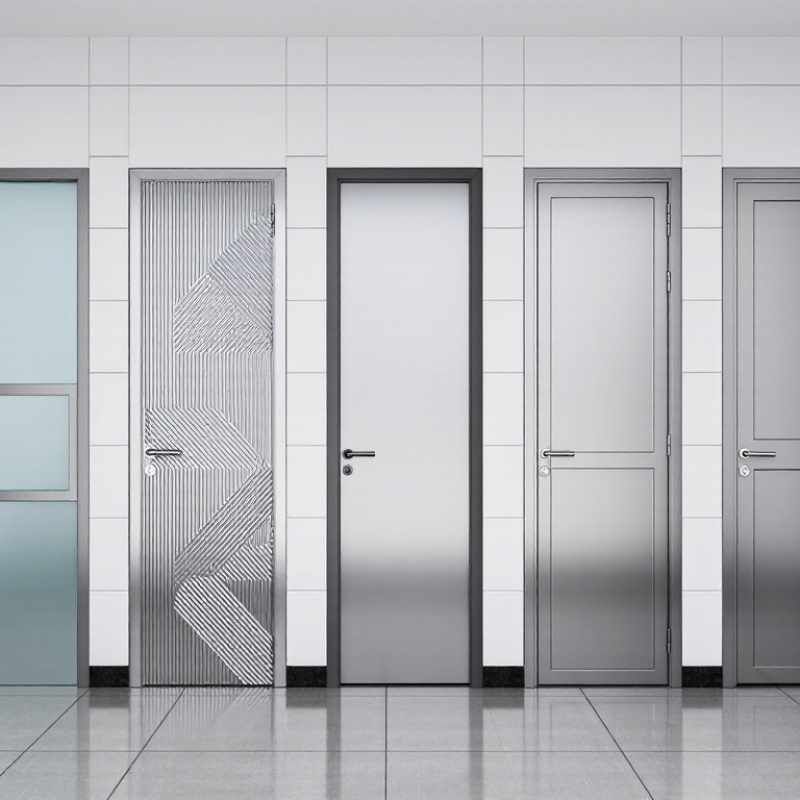
7 Best Aluminium Washroom Doors for Global Buyers?

What Defines an Aluminium Washroom Door?

An aluminium washroom door is a door built with aluminium components, usually a framed leaf or a panel with aluminium skins. The term alone does not describe its full construction. The core, edge seals, finish, hinges, and lock all affect how it performs in a damp room. Small details matter. For example, water can collect near the lower edge, while frequent cleaning may wear a poorly applied coating. A durable door should have a finish suited to regular moisture and cleaning, plus hardware selected for the same conditions.

The door should also suit its opening and daily use. Check the frame dimensions, clearance, swing direction, ventilation needs, and whether the panel can be maintained or replaced. A solid-feeling door is not automatically a better one; an unsuitable core or weak fixing can cause problems over time. Not always obvious. Buyers should request clear specifications for the aluminium grade, panel build-up, finish, and hardware, then confirm that these match the intended washroom environment. There is no single configuration for every project, and a low purchase price may leave important details unanswered. A sample can help reveal the finish texture and edge quality, though it cannot prove long-term durability.

Key Factors for Comparing Aluminium Washroom Doors

When comparing aluminium washroom doors, check the full assembly, not just the panel. Ask for the aluminium grade, frame thickness, and finish details. In humid rooms, coating quality matters because water and cleaning products can wear surfaces over time. Look closely at edges, corners, and cut-outs; these areas may show damage sooner. A sample helps. Wipe it with the intended cleaner and inspect for marks or dull patches. A brochure rarely reveals that.

Hardware needs equal attention. Hinges, locks, and handles should suit frequent use and resist corrosion. Check that the door closes smoothly without scraping the floor, especially where tiles are uneven. Privacy matters, but so does airflow. Compare the gap below the door and any ventilation openings with the room’s layout and requirements. Measure the opening at several points before ordering; older buildings are not always square. Small mismatch, big headache.

Also compare warranty terms, available replacement parts, and installation guidance. Ask how the finish should be cleaned and whether touch-ups are practical. A low purchase price may be less attractive if hinges need frequent adjustment or the surface is difficult to maintain. Still, specifications can look precise while leaving out real-world wear. Request test reports where relevant, then weigh them against the door’s intended traffic, cleaning routine, and expected service life.

Seven Aluminium Washroom Door Designs for Global Buyers

Global washroom projects need doors that balance privacy, moisture resistance, and easy maintenance. Seven designs suit different layouts. A flat aluminium panel offers a clean look and simple wipe-down care. A louvered door encourages airflow, useful in rooms where damp towels are common. A half-louvered design keeps ventilation while covering the lower section. Small details matter.

A narrow frosted-glass insert brings in borrowed light without making the room feel exposed. Check that the glass is safety-rated for its intended use and securely held in the frame. A sliding aluminium door saves swing space in tight corridors, but its track needs regular cleaning. A bi-fold door can work in compact cubicles, though hinges and clearances deserve careful checking. The seventh option pairs an aluminium frame with a durable compact-laminate infill, offering a warmer surface and practical privacy.

For any design, specify corrosion-resistant hardware, smooth edges, and finishes suited to frequent cleaning. Ask for samples; colour and texture can look different under strong washroom lighting. The sleekest option is not always the easiest to maintain. Ventilation needs, accessibility, and local project requirements vary, so confirm dimensions and performance with the installer. One overlooked issue: a door that closes neatly on paper may scrape once the floor finish is added.

7 Best Aluminium Washroom Doors for Global Buyers? - Seven Aluminium Washroom Door Designs for Global Buyers

A practical comparison of seven aluminium washroom door designs, covering typical construction, suitable settings, and key selection considerations.

Design Typical Construction Indicative Leaf Size (W × H) Suitable Applications Main Advantages Selection Considerations
1. Aluminium Frame with Compact Laminate Infill Aluminium perimeter frame with a solid compact laminate panel. 600–900 × 1,900–2,200 mm Public washrooms, schools, offices, and other high-use interiors. Solid panel provides visual privacy; compact laminate is commonly specified for wet-area cubicles and partitions. Confirm panel thickness, edge detailing, hardware, and cleaning requirements with the supplier.
2. Aluminium Frame with HPL Panel Aluminium frame fitted with a high-pressure laminate (HPL) panel. 600–900 × 1,900–2,200 mm Hotels, commercial buildings, and washrooms where coordinated interior finishes are desired. Offers a broad choice of decorative surface patterns and colours. Specify a panel and edge construction suitable for the expected moisture exposure; HPL products vary by grade and construction.
3. Aluminium Louvered Door Aluminium stiles and rails with fixed or adjustable ventilation louvers. 600–900 × 1,900–2,200 mm Service washrooms and locations where airflow is a priority. Allows air movement through the door without relying solely on a transfer grille. Louver position and blade angle affect sightlines and privacy; review the ventilation and privacy needs of the space.
4. Solid Aluminium Panel Door Aluminium door leaf with a solid or insulated core, depending on the specified system. 700–1,000 × 1,900–2,200 mm Washroom entrances, utility areas, and applications requiring a robust, easy-care surface. Non-porous metal surfaces are generally straightforward to wipe clean. Check the complete door-set specification, including core, frame, seals, hardware, and corrosion protection.
5. Frosted-Glass Aluminium Door Aluminium frame with frosted or obscured safety glazing. 600–900 × 1,900–2,200 mm Private washrooms in hotels, offices, and residential interiors. Transmits light while obscuring direct views when the selected glass and layout provide adequate privacy. Use glazing specified for the application and local safety rules; assess visibility and privacy under actual lighting conditions.
6. Aluminium Sliding Washroom Door Aluminium-framed leaf running on a top track, with suitable guides and privacy hardware. 700–1,000 × 1,900–2,200 mm Compact interiors where a swinging leaf would conflict with nearby fixtures or circulation. Does not require the same swing arc as a hinged door. Allow wall space for the open leaf and verify privacy, accessibility, emergency access, and local code requirements.
7. Powder-Coated Aluminium Frame and Panel Door Aluminium frame and compatible panel with a powder-coated finish. 600–1,000 × 1,900–2,200 mm Commercial and institutional washrooms requiring a coordinated finish. Powder coating provides a coloured finish and can help protect the aluminium when correctly specified and applied. Choose a finish suitable for the environment and follow the supplier’s cleaning guidance; avoid damage to the coating during installation.

Note: The dimensions shown are indicative configuration ranges, not universal standards. Confirm actual openings, accessibility clearances, fire and safety requirements, ventilation, and hardware specifications against local regulations and project conditions.

How to Choose a Door for Different Washroom Environments

Choosing an aluminium washroom door starts with the room’s moisture, traffic, and cleaning routine. In a busy public restroom, a sturdy frame and durable hinges matter more than decorative details. Check how the door feels when opened repeatedly, not just how it looks in a sample photo. Small details matter.

For showers or frequently wet areas, ask about the finish, edge protection, and hardware. Aluminium can resist corrosion, but poor finishing or unsuitable fittings may still wear down over time. Near the coast, salt in the air deserves extra attention. A dry office washroom has different needs; a simpler, lighter door may be adequate there. Ventilation gaps can help airflow, though they should not compromise privacy or the room’s intended use.

Measure the opening and consider who will use it. A sliding door can save space in a compact washroom, while a hinged door may be easier to inspect and maintain. Check clearance for mobility aids, the threshold height, and whether the handle is easy to grip with wet hands. Cleaning chemicals also vary, so confirm that the surface finish suits the products used on site. It is easy to overlook maintenance until a hinge loosens or water reaches an exposed edge. A realistic choice balances privacy, access, upkeep, and budget.

Global Buying Considerations: Standards, Shipping, and Installation

7 Best Aluminium Washroom Doors for Global Buyers?

Global Buying Considerations: Standards, Shipping, and Installation

For international orders, “compliant” is not a universal specification. Confirm local requirements for accessibility, fire performance, corrosion resistance, and hardware before approving drawings. Ask suppliers for test reports that match the proposed door assembly, not just the aluminium profile. In humid washrooms, check coating details, edge protection, and whether hinges and fixings resist corrosion. Small details matter.

Shipping deserves equal attention. UNCTAD’s Review of Maritime Transport 2024 reports that shipping carries over 80% of world merchandise trade by volume. That scale does not prevent damage to one poorly packed order. Specify corner protection, moisture barriers, labeled hardware packs, and crate dimensions. Confirm who handles import paperwork and what happens if parts arrive damaged. Freight assumptions can change quickly.

Installation starts with accurate site measurements. Check opening width, floor slope, wall condition, and required clearance before fabrication; a small mismatch can mean costly trimming or delays. Buyers sometimes approve drawings before checking the actual openings. That is backwards, yet it happens. The International Aluminium Institute reports that about 75% of all aluminium ever produced remains in use today, reflecting its recyclability. Still, recycling potential does not replace responsible sourcing or clear material documentation. Ask for installation instructions, replacement-part details, and finish samples, then compare them with site conditions.

7 Best Aluminium Washroom Doors for Global Buyers? — Global Buying Considerations: Standards, Shipping, and Installation

How to use this chart: These are common nominal door-leaf widths in U.S. customary sizing, converted to millimetres and rounded. Availability varies by market, and nominal leaf width is not the same as clear opening width. For example, the U.S. ADA Standards require at least 32 in (about 815 mm) clear opening width for applicable doors; check the complete door assembly and the local accessibility rules before ordering. Confirm packed dimensions, shipping protection, frame openings, and installation tolerances with your supplier.

Width values are conversions of 24, 27, 30, 32, 34, 36, and 40 in (1 in = 25.4 mm). ADA reference: 2010 ADA Standards for Accessible Design, section 404.2.3.

FAQS

What is an aluminium washroom door?

It uses aluminium components, such as a frame or panel skins. The term alone does not explain its core, seals, finish, or hardware.

What details affect performance in a damp washroom?

The finish, edge seals, core, hinges, and lock all matter. Water may collect along the lower edge, while frequent cleaning can wear a weak coating.

How should I choose a door design?

Match it to the room’s ventilation, privacy, available space, and daily use. A flat panel is easy to wipe down; a louvered design allows airflow.

Which design works in a narrow corridor?

A sliding door can save swing space. Its track needs regular cleaning. Worth considering.

Can a frosted-glass insert provide privacy?

A narrow insert can bring borrowed light while limiting visibility. Check that the glass suits its intended use and is held securely in the frame.

What should I check before ordering?

Confirm the opening dimensions, swing direction, clearances, ventilation needs, and panel construction. Ask for specifications covering the aluminium, finish, and hardware.

Are samples useful when choosing a finish?

Yes. A sample shows the texture and edge quality, but it cannot prove long-term durability. Washroom lighting may also change how a colour looks.

What can cause a door to scrape after installation?

The floor finish may reduce clearance, even if the door fits on paper. Check the finished floor height and test the door’s movement. I would not skip that check.

Conclusion

This guide explains what defines an Aluminium Washroom Door and the practical factors buyers should compare, including material quality, durability, privacy, ventilation, maintenance, and design. It introduces seven door styles suited to different needs, from compact spaces to busy commercial washrooms, and outlines how to match a design with the room’s layout, moisture levels, traffic, and intended use.

For global buyers, choosing the right door also means considering applicable product standards, dimensions, hardware compatibility, packaging, shipping conditions, and installation requirements. By evaluating these points together, buyers can select a washroom door that fits its environment, arrives in suitable condition, and can be installed and maintained with confidence.

Clara

Clara

Clara is a professional marketing specialist with a deep understanding of the company’s products, their practical applications, and the needs of the people who use them. She combines product knowledge with a clear, customer-focused approach, helping readers make sense of features, compare options,......